Your DEWA bill in Dubai is largely driven by air conditioning — AC accounts for 60–70% of residential electricity consumption during summer. The good news is that a combination of proper thermostat settings, regular maintenance, and simple insulation fixes can reduce your electricity bill by 15–25% without sacrificing comfort. These are not theoretical tips; they are the practical adjustments that consistently show up on lower DEWA statements.
Here are the changes that actually move the needle on your DEWA bill, ordered by impact.
1. Service Your AC Before Summer
This is the single highest-impact action. A professionally serviced AC system uses 15–25% less electricity than a neglected one. Dirty filters alone can increase energy consumption by 5–15%.
Schedule a full service for every unit before June. Quarterly servicing throughout summer maintains this efficiency gain. Cost: AED 150–250 per unit — the savings on your DEWA bill over 3–4 months typically exceed the service cost.
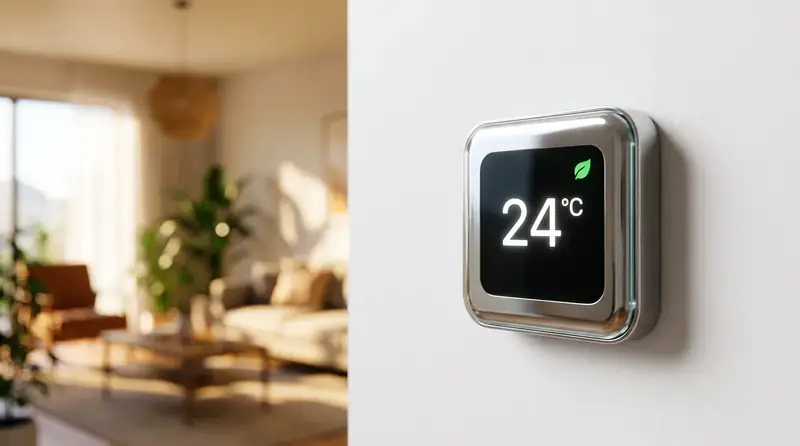
2. Set Your Thermostat to 24°C
The Department of Energy recommends 24°C as the optimal balance between comfort and efficiency in the UAE. Each degree below 24°C increases your energy consumption by approximately 3–5%.
- Day setting: 24°C
- Night setting: 22–23°C (slightly cooler for sleep comfort)
- Away setting: 26–27°C (or turn off units in empty rooms)
3. Use Ceiling Fans to Supplement AC
A ceiling fan circulating air allows you to set your AC 2–3°C higher while maintaining the same perceived comfort. A ceiling fan uses approximately AED 5–10/month in electricity; the AC savings from raising the thermostat offset this many times over.
4. Seal Windows and Doors
Gaps around windows and doors let hot air in and cooled air out. In older villas across Dubai — especially in communities like The Springs, The Meadows, and Mirdif — window seals dry out and crack within 5–7 years. Replacing weatherstripping and re-caulking costs AED 200–500 for a typical villa and can reduce AC runtime by 10–15%.
5. Use Curtains and Window Film
South- and west-facing windows receive the most solar heat gain. Blackout curtains or reflective window film can reduce heat gain through glass by 40–70%, directly reducing how hard your AC needs to work.
6. Turn Off AC in Empty Rooms
This seems obvious, but it is the most common source of wasted energy in Dubai villas. If a room will be unoccupied for more than 30 minutes, turn that unit off. With split AC systems, you have individual control — use it.
7. Schedule Night Cooling
Dubai's outdoor temperature drops to 28–32°C overnight during summer. Program your AC to increase the setpoint by 1–2°C after midnight. The reduced temperature differential means the compressor cycles less, saving energy during the 6–8 hours of sleep.
Muhammad Sheraz Technical Services L.L.C is a licensed and registered maintenance company in Dubai. All work is performed by certified technicians with comprehensive insurance coverage. Our AC servicing ensures your system runs at peak efficiency, directly lowering your DEWA bill.
Frequently Asked Questions
Set your AC to 24°C during the day and 22–23°C at night. Each degree below 24°C increases energy consumption by approximately 3–5%. Avoid setting it below 20°C — it will not cool the room faster and wastes electricity.
Yes. Fan mode uses roughly 90% less energy than cooling mode. Use it during cooler months (November–March) or in the early morning when outdoor temperatures drop. However, in Dubai summer, fan mode will not provide adequate cooling.
Smart thermostats can reduce AC energy consumption by 10–20% by learning usage patterns, adjusting temperatures when rooms are empty, and preventing the AC from running at full capacity unnecessarily. The investment (AED 500–1,500) typically pays for itself within 6–12 months.
Related reading: How Often to Service AC · AC Maintenance Cost 2026